October. This is one of the peculiarly dangerous months to speculate in stocks in. The others are July, January, September, April, November, May, March, June, December, August, and February.
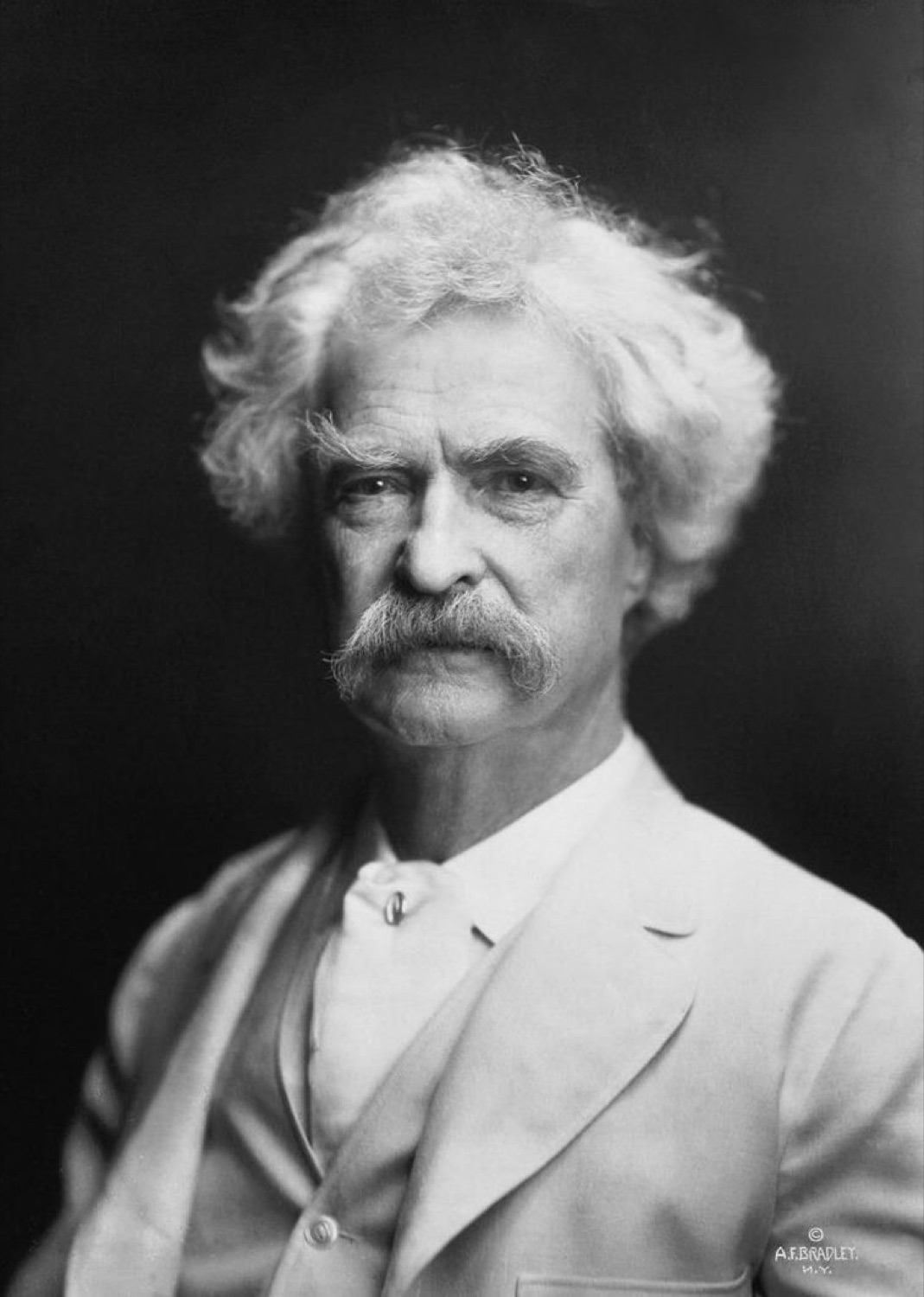
Mark Twain, Pudd'nhead Wilson (1894)
Mark Twain opened each chapter of Pudd'nhead Wilson with a maxim from "Pudd'nhead Wilson's Calendar." This one, at the head of chapter 13, is among his most quoted lines, and it is funnier still when you know how much money Twain lost.
A writer who could not resist a bet on the future
Samuel Clemens (1835–1910) earned a fortune from his books and lectures and spent much of it on investments. The most disastrous was the Paige Compositor, a mechanical typesetting machine he backed for more than a decade. It was ingenious, temperamental and soon overtaken by the Linotype. Together with the failure of his own publishing house, Charles L. Webster & Company, it left him bankrupt in 1894, the same year this quotation appeared.
Twain repaid his creditors in full by embarking on a round-the-world lecture tour, which became the travel book Following the Equator (1897). In it he returned to the theme, warning that there are two times when a man should not speculate: when he can't afford it, and when he can.
Twain, luck and the card table
Twain knew the gambling culture of the Mississippi intimately. As a young riverboat pilot in the late 1850s he watched professional card sharps work the steamboats, and Life on the Mississippi (1883) is full of their stories. In the West he worked as a newspaperman among the mining camps of Nevada and California, where poker and faro were a way of life. His fiction is crowded with confidence men, lotteries, wagers and bets, from "The Celebrated Jumping Frog of Calaveras County," which turns on a bet, to the duke and the king in Huckleberry Finn. For other writers who knew the tables first-hand, read our feature on Dostoevsky and The Gambler.
See more quotations on our Author Quotes page.