James Bond's first adventure does not open with a gunfight or a car chase. It opens in a casino at three in the morning. Fleming's first line, "The scent and smoke and sweat of a casino are nauseating at three in the morning," tells you at once that this is a book about gambling, and about the man who sits down at the table when everyone else has gone to bed.
A spy story built around one game
Casino Royale was published in April 1953, after Fleming wrote it in a few weeks at Goldeneye, his house in Jamaica. The plot is beautifully simple. Le Chiffre, a Soviet agent who controls a French trade union, has embezzled its funds and lost them in a failed business. To cover the hole before his masters notice, he plans to win the money back at the baccarat tables of Royale-les-Eaux, a fictional resort on the northern French coast. British intelligence sends its best card player to beat him, ruin him and expose him. That player is James Bond.
The heart of the book is a long, tense game of baccarat in which Le Chiffre holds the bank and Bond tries to break it. Fleming explains the rules to readers through Bond's own thoughts: two or three cards, the total closest to nine wins, and the face cards count for nothing. Then he turns a simple game of chance into a duel of nerves. Bond loses nearly all his stake, is rescued by a timely envelope of money from his CIA friend Felix Leiter, and comes back to win the decisive coup with a hand of nine.
The Estoril connection
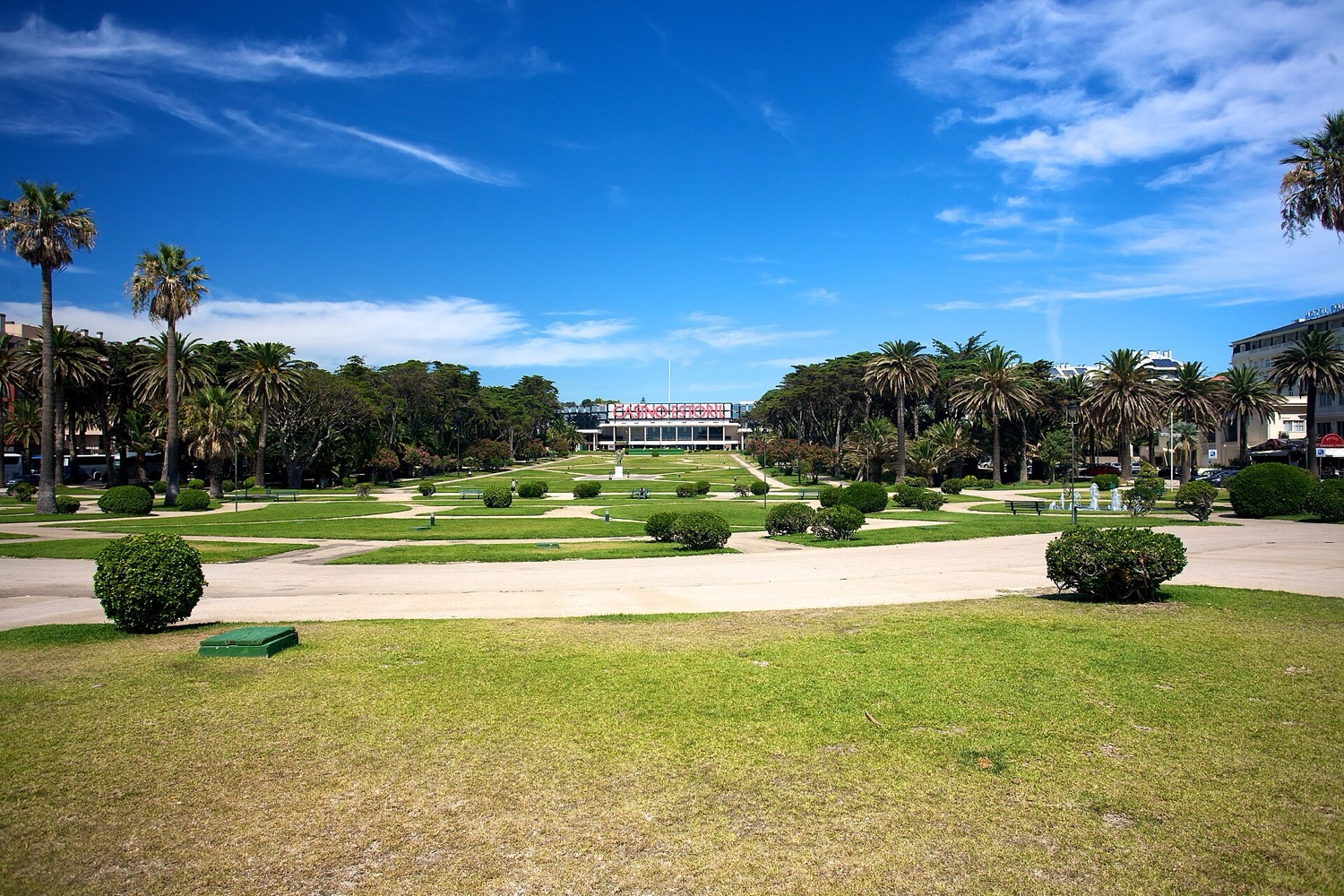
Fleming drew on his own experience. In 1941, as a naval intelligence officer, he travelled through neutral Portugal with his chief, Admiral John Godfrey, and spent an evening at the casino in Estoril, near Lisbon, a town then full of spies, refugees and exiled royalty. Fleming later claimed he had played cards against German agents there and lost. Godfrey remembered it differently: the opponents were Portuguese businessmen, and Fleming merely daydreamed about how thrilling it would be if they were Nazis. Either way, the idea of beating the enemy at the card table stayed with him for more than a decade.
Royale-les-Eaux itself is usually said to borrow from the elegant casino resorts of the French Channel coast, such as Deauville and Le Touquet, which Fleming knew well.
Fleming the gambler
Fleming loved cards and played bridge and other games for money at his London clubs. Gambling runs through the Bond novels: in Moonraker (1955) Bond turns the tables on Hugo Drax, who has been cheating at bridge at the exclusive Blades club; Goldfinger (1959) opens with Goldfinger cheating at canasta beside a Miami pool; and Diamonds Are Forever (1956) takes Bond to Las Vegas.
Baccarat in brief
- Object
- Bet on the hand, banker or player, whose total is closest to nine
- Card values
- Ace counts 1, tens and face cards 0, others face value
- House edge
- About 1.06% on banker (after commission), 1.24% on player, much higher on a tie
- In the novel
- Le Chiffre holds the bank; Bond breaks him in the final coup
- In the 2006 film
- Replaced by no-limit Texas hold'em
From baccarat to hold'em on screen
Casino Royale has a strange screen history. It was first adapted for American television in 1954, as a live episode of the anthology series Climax!, with Barry Nelson as an American agent called "Jimmy Bond" and Peter Lorre as Le Chiffre. In 1967 it became a chaotic spy spoof starring David Niven and Peter Sellers. Only in 2006 did Eon Productions film it properly, with Daniel Craig in his first outing as Bond.
The 2006 film moved the casino to Montenegro, though it was shot largely in the Czech Republic, and replaced baccarat with no-limit Texas hold'em. The reason was timing: televised poker was booming in the mid-2000s, and audiences understood hold'em in a way they no longer understood baccarat. Purists grumbled, but the change kept Fleming's core idea intact. A card game is a perfect stage for a spy story, because both are about reading people, controlling fear and knowing when to bluff.
Why it still works
Seventy years on, Casino Royale remains the most human of the Bond novels. Bond is often frightened, sometimes beaten and finally betrayed, and the ending, a single cold line spoken down a telephone, still lands like a slap. It is also one of the best novels ever written about a casino. Pair it with our guide to writing a believable casino scene, where Fleming's methods come up again, or browse more in Casino Novels.