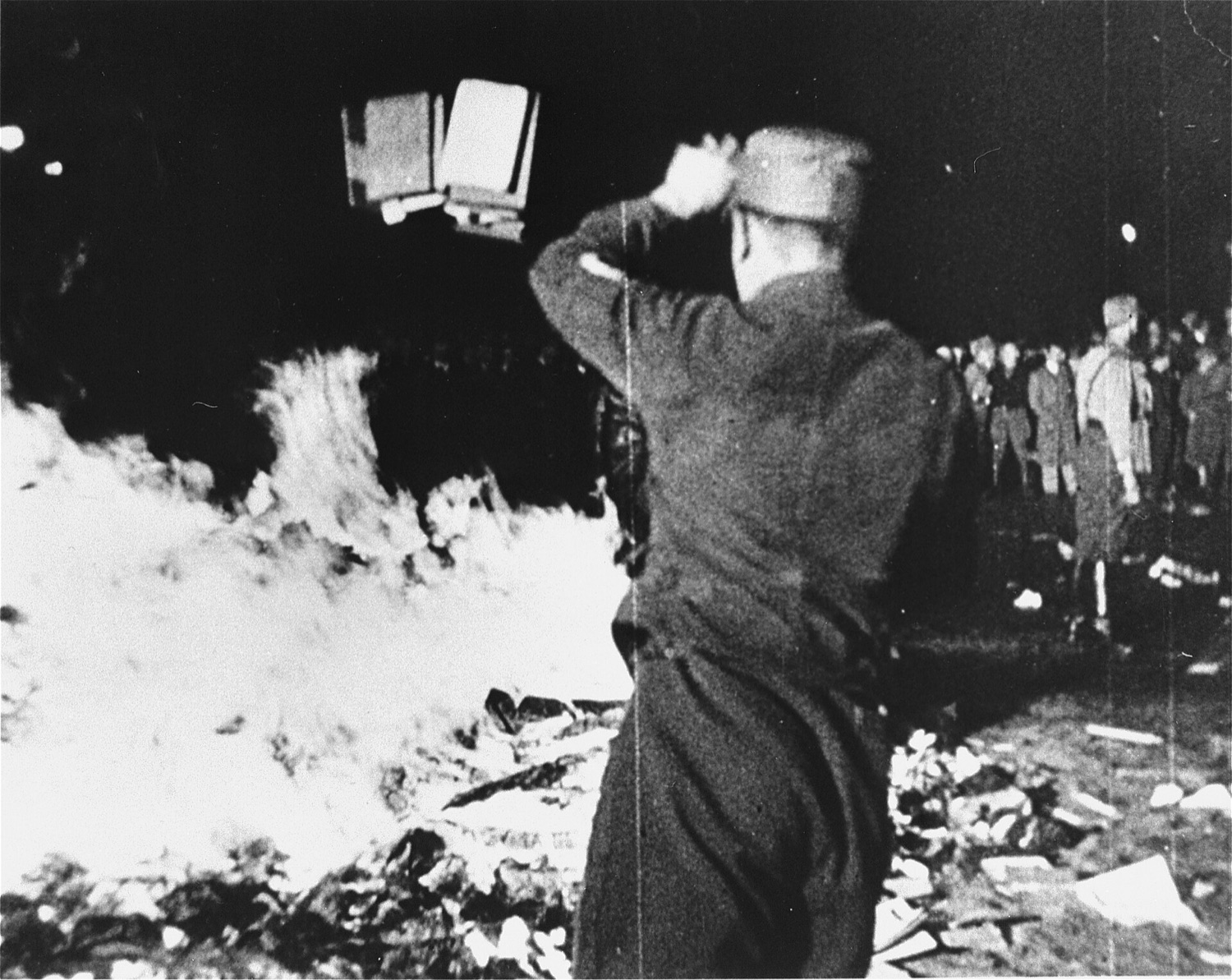
The saying goes that the pen is mightier than the sword, and authorities throughout history seem to have agreed. The banning of words is older than printed books. In what is now the United States, the first known book banning took place in 1637, more than a century before the country existed, when Thomas Morton's satire of the Puritans, New English Canaan, was suppressed in Massachusetts.
From politically subversive texts to religious works seen as a threat to authority, to books judged too sexual for young minds, banning words has always been a tool of control. Those who defend censorship often say they are protecting others, but the protection is usually of themselves. The history is far from finished. Sometimes it takes the form of government bans, sometimes of threats or violence against writers. Yet as the list below shows, banning books rarely works. Readers find ways to read what is forbidden.
Banned books throughout history
Here are some of the most famous cases, in order of publication.
Lysistrata by Aristophanes (411 BCE)
Aristophanes' comedy about Athenian women who withhold sex to end the Peloponnesian War is one of the great gifts of Greek theatre. Ironically, Greece's military government banned it in 1967 because of its anti-war message.
The Bible (first printed around 1455)
Gutenberg's printed Bible transformed reading, and the Bible has been banned or restricted many times since, from the Soviet Union, which suppressed religious publishing for decades, to several countries today where owning or distributing it is restricted.
The Canterbury Tales by Geoffrey Chaucer (printed 1476)
Chaucer's bawdy stories ran into trouble in the United States under the Comstock Act of 1873, which made it a crime to send "obscene" material through the mail. Unexpurgated editions were treated as suspect for decades.
Fanny Hill by John Cleland (1748)
Cleland reportedly wrote much of the novel in debtors' prison, short of money and writing what he knew would sell. It became one of the most banned books in history. A Massachusetts court condemned it in 1821, and it was not cleared until the U.S. Supreme Court ruled in 1966 that it was not obscene.
Les Fleurs du mal by Charles Baudelaire (1857)
Baudelaire and his publisher were prosecuted for offending public morals, and six poems were banned in France until 1949. The scandal is the backdrop to the novel Baudelaire's Revenge.
Alice's Adventures in Wonderland by Lewis Carroll (1865)
According to a widely reported story, a provincial governor in China banned the book in 1931 because animals in it talked and behaved like humans, which censors thought would teach children to see animals and people as equals.
The Call of the Wild by Jack London (1903)
London's socialist sympathies made his books targets in authoritarian Europe. His work was among the books removed and burned in Nazi Germany in 1933.
Ulysses by James Joyce (1922)
Copies were seized and burned by customs officials in the United States and Britain. A landmark 1933 U.S. court decision ruled that the novel was not obscene, and it was legally published in America the following year.
Elmer Gantry by Sinclair Lewis (1927)
Lewis's satire of a hypocritical evangelist is one of the great American satirical novels. On publication it was banned in Boston and other cities and denounced from pulpits across the country.
Animal Farm by George Orwell (1945)
Orwell finished his fable in 1944, while Britain was allied with the Soviet Union, and several publishers turned it down because of its obvious target. Once published, it was banned throughout the communist world and is still restricted in some countries.
Charlotte's Web by E.B. White (1952)
One of the best-loved children's books ever written has been challenged more than once. In 2006 a parents' group in Kansas objected that talking animals were unnatural and disrespectful to God. More on why adults should reread it in our list of children's books worth rereading.
The Satanic Verses by Salman Rushdie (1988)
The novel provoked protests in parts of the Muslim world. In 1989 Iran's Ayatollah Khomeini issued a fatwa calling for Rushdie's death, and the book was banned in many countries, starting with India. Rushdie lived under police protection for years, and in 2022 he was seriously injured in a knife attack in New York State.
The Da Vinci Code by Dan Brown (2003)
Dan Brown's thriller about secret societies and the Catholic Church was a global sensation, and in 2004 Lebanon banned it after Catholic leaders called it offensive to Christianity.
Books under threat today
Efforts to remove books continue in American schools and libraries, and the number of challenges has risen sharply in recent years. The American Library Association tracks challenged titles and organises Banned Books Week every autumn, which is a good moment to read something someone once tried to keep from you.